
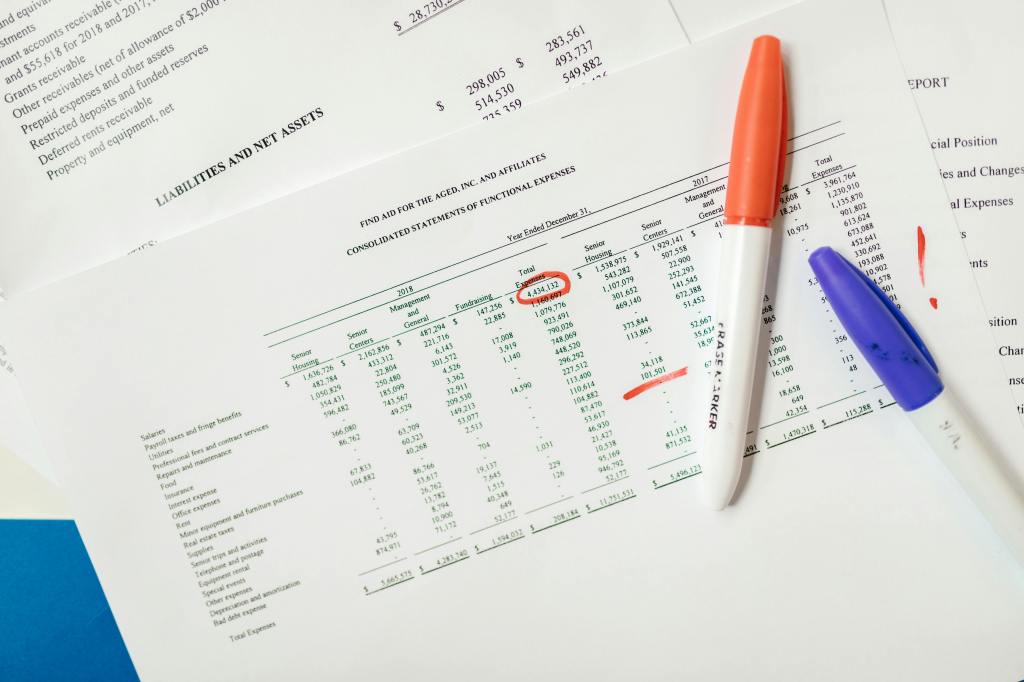
A comparative balance sheet is used to provide several snapshots of your business’s financial health at a specific point in time. It may also be used to create financial projections for several periods into the future. The balance sheet is modeled after the accounting equation, which states: Assets = Liabilities + Owner’s equity. Therefore, the balance sheet not only provides valuable insight into the efficiency and health of your business, but it also serves as a check on your accounting process. I have included the general instructions for specific line items below, which can also be found on the template. Feel free to modify, delete, add, and reformat the balance sheet as you please.
General Instructions:
Cash & Cash Equivalents: includes physical cash, business checking and saving accounts, as well as short-term, liquid investments. This includes short-term certificate of deposits (CDs) that you bought with business funds.
Finished Goods: for a manufacturing business, this is the total cost of goods available for sale at the end of the period. It is calculated as:
Ending Finished Goods= Beginning Work in Progress + Cost of Goods Manufactured – Ending Work in Progress
For a merchandising business, relabel finished goods as “inventory.” Ideally, this is the ending inventory number resulting from a physical inventory count. Reduce the inventory account for any decrease in value caused by obselence, a decrease in market value, expiration, etc. The amount by which inventory is decreased appears on the balance sheet as impairment expense.
Prepaid Assets: also known as prepaid expenses, prepaid assets are assets that you have the right to receive future benefit from, but which you have already paid for. An example is rent paid at the beginning of the year which gives your business the right to use the premises for the next 12 months. Only the unused amount of the prepaid asset should appear here. If you are 4 months into the 12 month rent contract, only the remaining 8 month portion should appear in prepaid assets.
Acccumulated Depreciation of Fixed Assets: this is the total amount of depreciation occured across all historical periods for all fixed assets that exist on the balance sheet. If a fixed asset was salvaged, sold, or otherwise disposed during the period, that fixed asset should be eliminated from the balance sheet, along with its associated accumulated depreciation. Please note that land is considered to have an indefinite useful life, so there should be no accumulated depreciation for land owned by the business.
Extended Warranties: extended warranties are warranties that you paid for, seperate to the purchase of the asset itself. This is in contrast to embedded warranties, which were paid for as part of the initial purchase price and are not listed seperately on the balance sheet. You can recognize extended warranties as either short- or long-term assets depending on whether they expire within 12 months or not.
Deffered Revenue: occurs when customers pay you for services/goods for which you have not fulfilled your obligation. Since you have an obligation to provide a future benefit for the customer, it is labeled as a liability. An example is a customer pays me $600 for a front door, which I will manufacture and deliver in two weeks.
Current Portion of Long-Term Debt: this is the portion of long-term debt which you expect to pay within the next 12 months. This only includes principal payments.
Owner’s Contributions: this is the total amount of funds you have injected into the business over the entire life of the business.
Ending Retained Earnings Balance: this is the accumulation of net income, less any dividends or withdrawals, for the entire life of the business. It is calculated as:
Ending Retained Earnings Balance= Beginning Retained Earnings Balance + Net Income – Dividends/Withdrawals
 The Accounting Geek
Leave a comment